
Garden Shed Construction in Central Arkansas
Garden shed construction for Conway and Central Arkansas gardeners. Light, ventilation, potting space, and tool storage planned around growing seasons.
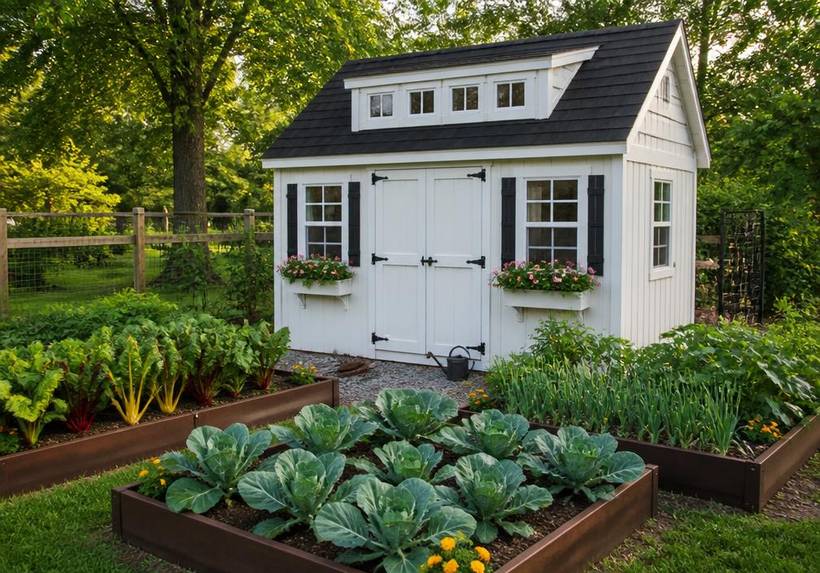
Garden sheds are working buildings disguised as pretty ones. They hold soil, pots, hand tools, seed, hoses, and fertilizer, and they get used in humidity that Central Arkansas delivers generously from May through September.
That combination puts light and airflow at the top of the design list, with a potting surface and washable storage right behind.
Light and airflow first
Windows on two sides plus gable or ridge ventilation keeps the interior workable in summer and helps tools dry out after a wet week.
A door that can stand open with a screen or a wide opening facing the garden makes the building far more pleasant to use.
Overhangs shield doors and siding from direct rainfall, which reduces how often finishes need attention. Matching siding and trim colors to the house is the difference between a building that looks planned and one that looks parked. For properties outside city limits, county requirements and easements can apply even where city zoning does not. The floor system deserves as much attention as the walls, since it carries every load the building will ever hold. Ventilation matters more in Arkansas than in drier climates, particularly for anything stored in sealed containers or on a concrete surface.
Setback rules vary between cities in Faulkner County and Pulaski County, so confirming them early prevents redrawing the plan later. Buildings used for hobbies get visited daily; buildings used for storage get visited weekly. Design accordingly. Slope across the footprint drives the site work, and even a modest fall changes how the pad has to be built. Hardware quality shows up in daily use. Hinges and latches take more abuse on an outbuilding than on anything inside the house. Ramps should be long enough to be gentle; a steep short ramp turns loading equipment into a two-person job.
Layout for real gardening
A waist-height potting bench near the door, hooks for long-handled tools on one wall, and low shelving for bagged soil keeps the floor clear.
Locating the shed near the hose bib and the beds reduces the number of trips across the yard every single session.
Where a building sits relative to the house affects how often it actually gets used, and convenience wins over theory every time. Orientation affects sun exposure through the doors and windows, which matters if the space will be used for work rather than storage. Central Arkansas weather swings from humid summer stretches to wet, freeze-thaw winters, and a garden shed has to handle both without complaint. Roof pitch affects both the look of the building and the volume available overhead, which is why it is a design decision rather than a default. Door swing direction seems trivial until a door blocks the shelving you use most.
The starting point for a garden shed is always the same: write down what goes inside, then measure the three largest items on that list. The most common regret we hear is not about finishes; it is about size, and specifically about not going one increment larger. Setback rules vary between cities in Faulkner County and Pulaski County, so confirming them early prevents redrawing the plan later. Framing details, fastener choices, and flashing at transitions are the parts nobody sees and everybody feels five years later. A short walk of the property with a tape measure answers more questions than an hour of browsing photographs online.
Sizing and layout considerations
Wall height is worth an extra conversation, since a foot of additional height often adds more practical storage than a foot of additional length. Central Arkansas weather swings from humid summer stretches to wet, freeze-thaw winters, and a garden shed has to handle both without complaint. Orientation affects sun exposure through the doors and windows, which matters if the space will be used for work rather than storage. Access paths deserve planning: a gravel or paver walkway keeps mud out and makes the building usable after rain instead of two days later. Planning the interior layout on paper, to scale, catches conflicts that are obvious on a drawing and invisible in your head. Loft or overhead storage handles seasonal and lightweight items well, freeing the main floor for the things used weekly.
Setback rules vary between cities in Faulkner County and Pulaski County, so confirming them early prevents redrawing the plan later. Keeping the ridge line parallel with the house or the fence makes the whole yard look more deliberate. Buildings age better when air can move through them, so soffit, gable, or ridge ventilation is worth including in the plan. Trim details around doors and corners are what make a modest building look finished rather than utilitarian. Think about the next owner of the property too; a well-proportioned outbuilding reads as an asset rather than a project. Grading around the perimeter should carry water away from the building, not toward it, and that grade needs occasional attention.
Site conditions in Central Arkansas
Buildings used for hobbies get visited daily; buildings used for storage get visited weekly. Design accordingly. Security is worth a thought: hardware, hinge placement, and window position all factor into how easily a building can be opened. Grading around the perimeter should carry water away from the building, not toward it, and that grade needs occasional attention. Framing details, fastener choices, and flashing at transitions are the parts nobody sees and everybody feels five years later. Talking through the project before committing to dimensions costs nothing and routinely changes the final plan for the better. Plan for the tools you intend to buy, not just the tools you own, if you expect the space to serve you for a decade.
In Conway, lot shape and existing landscaping often determine placement as much as personal preference does. Overhangs shield doors and siding from direct rainfall, which reduces how often finishes need attention. Ventilation matters more in Arkansas than in drier climates, particularly for anything stored in sealed containers or on a concrete surface. Door swing direction seems trivial until a door blocks the shelving you use most. Winter access matters in hill-country areas where a gravel drive can get slick, so approach grade is part of placement. Homeowners around Conway tend to underestimate how much clearance a building needs on the inside once shelving goes up along the walls.
Materials, finishes, and details
A short walk of the property with a tape measure answers more questions than an hour of browsing photographs online. The most common regret we hear is not about finishes; it is about size, and specifically about not going one increment larger. The starting point for a garden shed is always the same: write down what goes inside, then measure the three largest items on that list. Drainage is the quiet variable. A building placed where water naturally collects will fight moisture for its entire life, regardless of how well it was framed. Keeping a foot or two of clearance on every side allows maintenance, trimming, and painting without dismantling anything. Where a building sits relative to the house affects how often it actually gets used, and convenience wins over theory every time.
The floor system deserves as much attention as the walls, since it carries every load the building will ever hold. Natural light changes how a building feels to work in, and a single well-placed window frequently removes the need to run temporary lighting. A clear center aisle is the single most reliable way to keep a building from turning into an unreachable pile within a year. Think about the next owner of the property too; a well-proportioned outbuilding reads as an asset rather than a project. Talking through the project before committing to dimensions costs nothing and routinely changes the final plan for the better. Interior finish level should match the use. A workshop benefits from finished walls; a mower shed usually does not need them.
Getting the most from the finished building
Door width decides more about daily usability than almost any other dimension, because a building you have to angle things into gets used less. Ventilation matters more in Arkansas than in drier climates, particularly for anything stored in sealed containers or on a concrete surface. The most common regret we hear is not about finishes; it is about size, and specifically about not going one increment larger. Think about the next owner of the property too; a well-proportioned outbuilding reads as an asset rather than a project. Where a building sits relative to the house affects how often it actually gets used, and convenience wins over theory every time. Color choice affects interior temperature more than people expect, especially with metal roofing under an Arkansas July sun.
Security is worth a thought: hardware, hinge placement, and window position all factor into how easily a building can be opened. In Conway, lot shape and existing landscaping often determine placement as much as personal preference does. Winter access matters in hill-country areas where a gravel drive can get slick, so approach grade is part of placement. Planning the interior layout on paper, to scale, catches conflicts that are obvious on a drawing and invisible in your head. Anyone storing fuel, fertilizer, or chemicals should plan sealed containers, dedicated shelving, and real airflow from the beginning. Buildings age better when air can move through them, so soffit, gable, or ridge ventilation is worth including in the plan.
Request a Free Estimate
Call 501-406-0687 to talk through the details with a builder who works in this area every week.
Garden Shed Construction: Common Questions
Where should a garden shed go?
Close to the beds and the water source, with enough sun exposure to dry out after rain but not so exposed that the interior bakes all afternoon.
Do garden sheds need windows?
They benefit greatly from them. Natural light makes potting and seed starting practical without running electrical service.
Can I start seedlings inside one?
Many gardeners do, using window light and shelving. Temperature swings should be considered when planning window area and ventilation.
How do I keep humidity down?
Ventilation, an elevated or well-drained floor, and keeping soil bags off the floor all help in the Arkansas climate.
What about storing fertilizer and chemicals?
Keep them in sealed containers on dedicated shelving, away from hand tools, and out of reach if children use the yard.
Can a garden shed also hold a mower?
It can, but combining functions usually means going up a size and widening the door. Otherwise the mower ends up blocking the potting area.
Start Your Garden Shed Construction Project
Call 501-406-0687 to schedule a conversation about your project. You can also request a free estimate online or read our planning guides first.